

Professional force
NYSUT is a leading voice on educational issues
In a tremendous win for the union and its next generation of members, the Board of Regents in 2022 voted to get rid of the state’s controversial edTPA requirement for teacher certification. This victory, years in the making, eliminated one of the most troublesome albatrosses from the test-and-punish era.
Aspiring educators had testified at NYSUT’s Take a Look at Teaching summits that the mandated edTPA assessment — which cost $300 and required time-consuming documentation and classroom video — was discouraging prospective educators and ruining their student teaching experiences. Carrying forward their concerns with its higher ed affiliates, NYSUT’s successful campaign to end edTPA frees the next generation of teachers to concentrate on mentored classroom experiences.
This success story is one of many examples of NYSUT’s half century of leadership on educational policy. The union from its inception was committed to providing members a voice in the many arenas that impact their professions: from local school boards to the State Education Department, Board of Regents, governor, Legislature and the courts. With our national affiliates the AFT and NEA, union advocacy on educational policy extends to the federal level.
Teacher evaluation plan sparks outrage
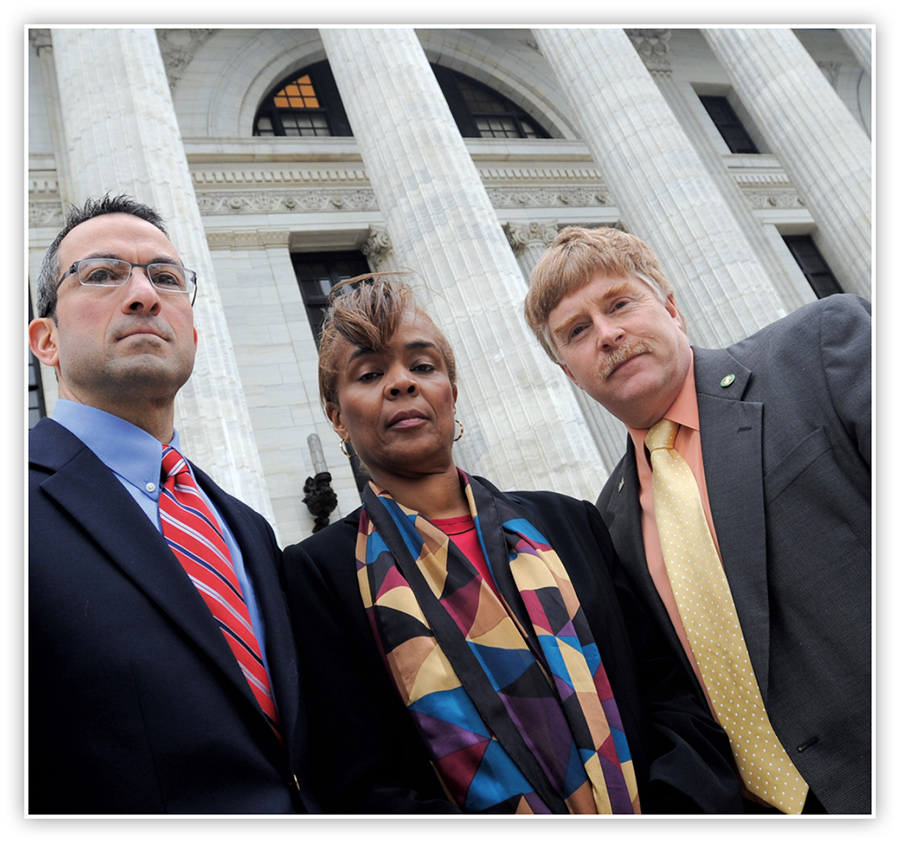
Educators around the state, including a group of New York State Teachers of the Year, joined the union in making the case that the state’s standardized tests were never meant to evaluate educators. They insisted the goal of evaluations should be to support — not punish. In 2011, Teachers of the Year dramatically stood on the steps of the State Education Department to voice their outrage over APPR plans.
Rushed tests and curriculum
The union launched a “Tell It Like It Is” campaign with statewide forums and protests that evoked an outpouring of testimony on the devastation caused by rushed imposition of high-stakes tests. A parent from Allegheny County said: “My son is stressed to the point of crying himself to sleep the night before a test.” Reports from special education teachers, forced to test several grade levels above where students were learning, carried particular anguish. Massive turnout at a 2013 NYSUT-sponsored rally in Albany channeled the outrage of thousands of parents and teachers as folk singer and parent Tom Chapin sang of engaging learning opportunity lost because it was “Not on the Test.”
In an unprecedented move, NYSUT delegates at the 2014 RA passed a resolution of “no confidence” in Education Commissioner John King, calling for his ouster. At the same RA, Karen Magee was elected NYSUT president, the first woman to hold that office.
Later that year, a new threat emerged as anti-education groups, one headed by a media dilettante and funded by Wall Street billionaires, filed lawsuits challenging New York’s due process laws establishing tenure. NYSUT countered swiftly on both the legal and communications fronts.
By 2015, then-Gov. Andrew Cuomo grew more hostile, angry at the union’s pushback and particularly irate that collective bargaining had countered the punitive intentions of APPR. In a vicious budget proposal that shortchanged public schools and colleges, he sought to gut tenure and collective bargaining. He also doubled down on high-stakes testing. It’s hard to overstate how tumultuous and exhausting this time was. While NYSUT had challenged SED on many issues and protested when needed, the union previously managed to maintain ongoing collaboration with SED. Now NYSUT was at war with the State Education Department, its commissioner, the Regents and the governor. The stakes couldn’t be higher.
The union ramped up one of the most sustained campaigns in its history dedicated to educational principles. NYSUT’s full court press against “test-and-punish” encompassed political action, multi-media campaigns and full mobilization of the Member Action Center, using its newly launched mobile app and Twitter to proclaim #Allkidsneed and #invitecuomo — because the governor had yet to visit a public school. In 2015, nearly 1,000 educators and supporters rallied at the New York State Fair’s Governor’s Day to highlight how Cuomo was being unfair to public education.
Further grassroots actions ignited. Community forums proliferated. Beginning with a trickle that crescendoed into a groundswell, parents in stunning numbers opted their kids out of the state’s high-stakes tests.
Later in 2015, just months after declaring war, Cuomo capitulated: it was time for a “reboot” of tests and evaluations.
When the dust had settled, New York had implemented moratoriums on APPR misuse, dramatically reduced testing, modified tests for students with disabilities and English language learners and empowered teachers to develop educational standards. Commissioner King moved on. Meanwhile, collective bargaining continued to defend against APPR misuse.
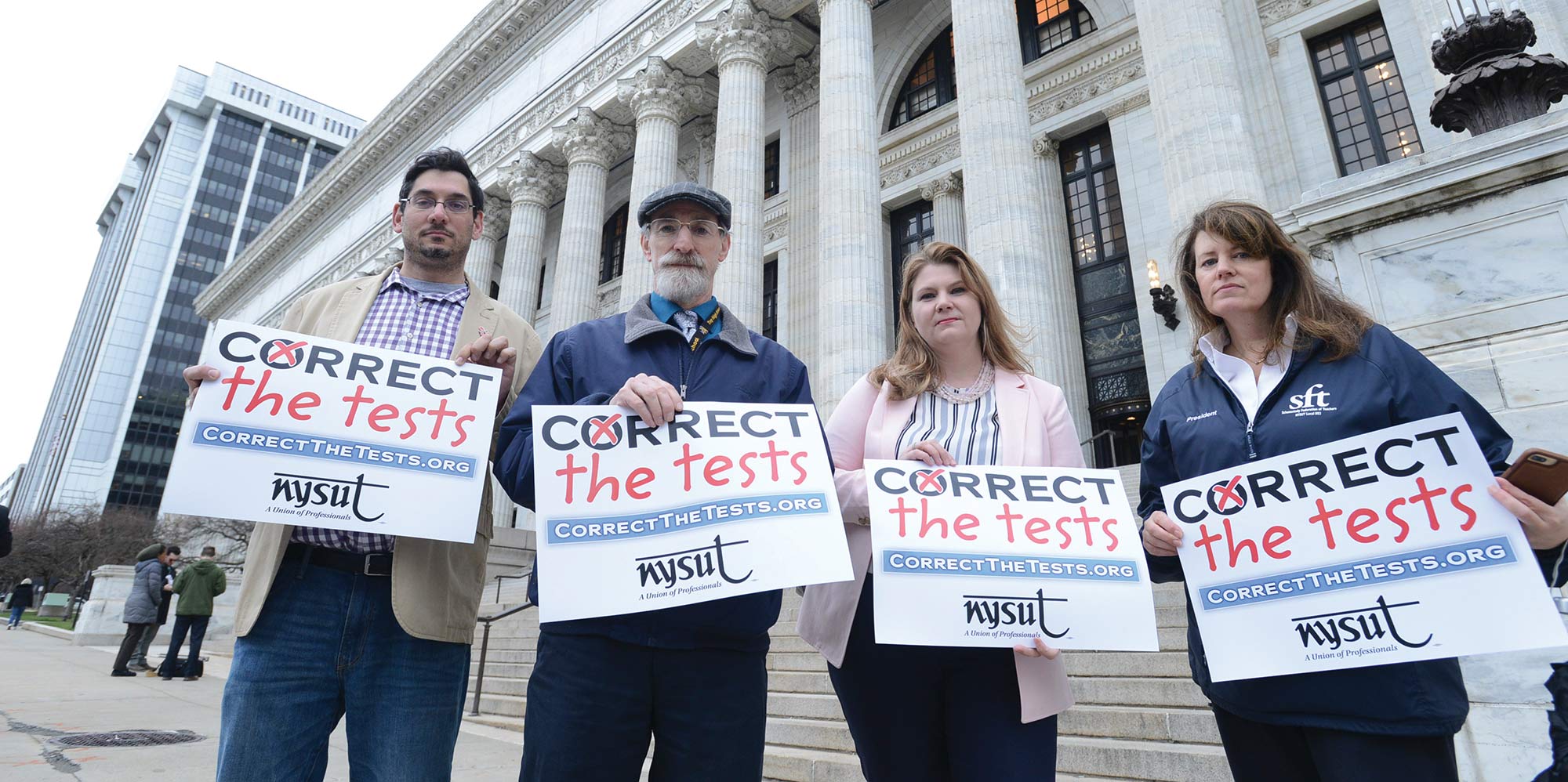
As the world emerged from a pandemic in 2022, the worst excesses of test-and-punish diminished, but the union is not done. NYSUT will not rest until teacher evaluations are restored to local control. Similarly, the union’s “Correct the Tests” campaign advocates for a new assessment system to better measure student progress and end standardized test prep condemned by parents and teachers alike. The union strongly supports U.S. Rep. Jamaal Bowman’s More Teaching, Less Testing Act to bring balance and flexibility to federally required standardized testing.
‘They said it wasn’t our role’
In the 1970s, in a forerunner to edTPA, locals were being pressured to adopt “competency-based teacher education,” a questionable checklist for student teachers that ranged “from the practical to the ridiculous,” said NYSUT’s Antonia Cortese.

In 1983, when A Nation at Risk highlighted problems with public education, AFT’s Al Shanker surprised pundits by being among the first to see a need for change. “Al urged us to acknowledge that standards had slipped and that our students could and should be challenged,” Cortese said. “We had a very vigorous debate within the union about what our decision should be.” That decision — to support raising standards — increased the union’s credibility and its influence in shaping reforms.

Professional growth
“All students benefit from a diverse educator workforce,” said NYSUT Executive Vice President Jolene DiBrango.
After a series of Take a Look at Teaching summits around the state, NYSUT provided “Grow Your Own” grants to more than 40 local unions to start and expand programs to encourage interest in teaching, including clubs, P–12 partnerships with higher education, community engagement, college visits and opportunities for older students to work with youngsters. A Take a Look at Teaching website includes sample lesson plans, activities and career information to encourage interest in the profession. In addition, NYSUT experts help members with questions about certification and professional learning.
Other examples of NYSUT’s continued work on professional issues include: courses taught by practitioners through the union’s Education and Learning Trust; expansion of Teacher Centers; and the creation of state-funded Albert Shanker grants to offset the costs of pursuing National Board Certification.
NYSUT’s history vividly illustrates how powerful institutional forces shape — and sometimes warp — public education. It is only the union’s collective power that provides consistent counterbalance in defending what kids and teachers need — and improving public education as a whole.
Timeline
-
1999Court finds Greenburgh 11 school board violated open meetings law, erred in firing teachers.
-
1999New York’s highest court affirms the role of arbitrations in settling disputes.
-
1999A three-day strike in Yonkers makes salary gains and challenges unreasonable class sizes — some classes had up to 38 preschoolers.
-
1999NYSUT gains tier reinstatement for women whose careers were interrupted with child-rearing, ending the “parenting penalty.”
-
2000NYSUT’s Education & Learning Trust launches SRP professional development workshops delivered by SRP members.
-
2000Tens of thousands of NYSUT members rally in Albany, creating momentum for a permanent pension COLA; NYSUT wins elimination of 3 percent pension contribution after 10 years of service.
-
2000NYSUT prevents rushed imposition of a hastily prepared statewide social studies test for fifth-graders.
-
2000The Safe Schools Against Violence in Education Act requires school safety plans to prevent and address violence.
-
2000The union joins a statewide coalition engaging parents on behalf of the Campaign for Fiscal Equity to secure fair funding for public education.