

STRIKES & SACRIFICE
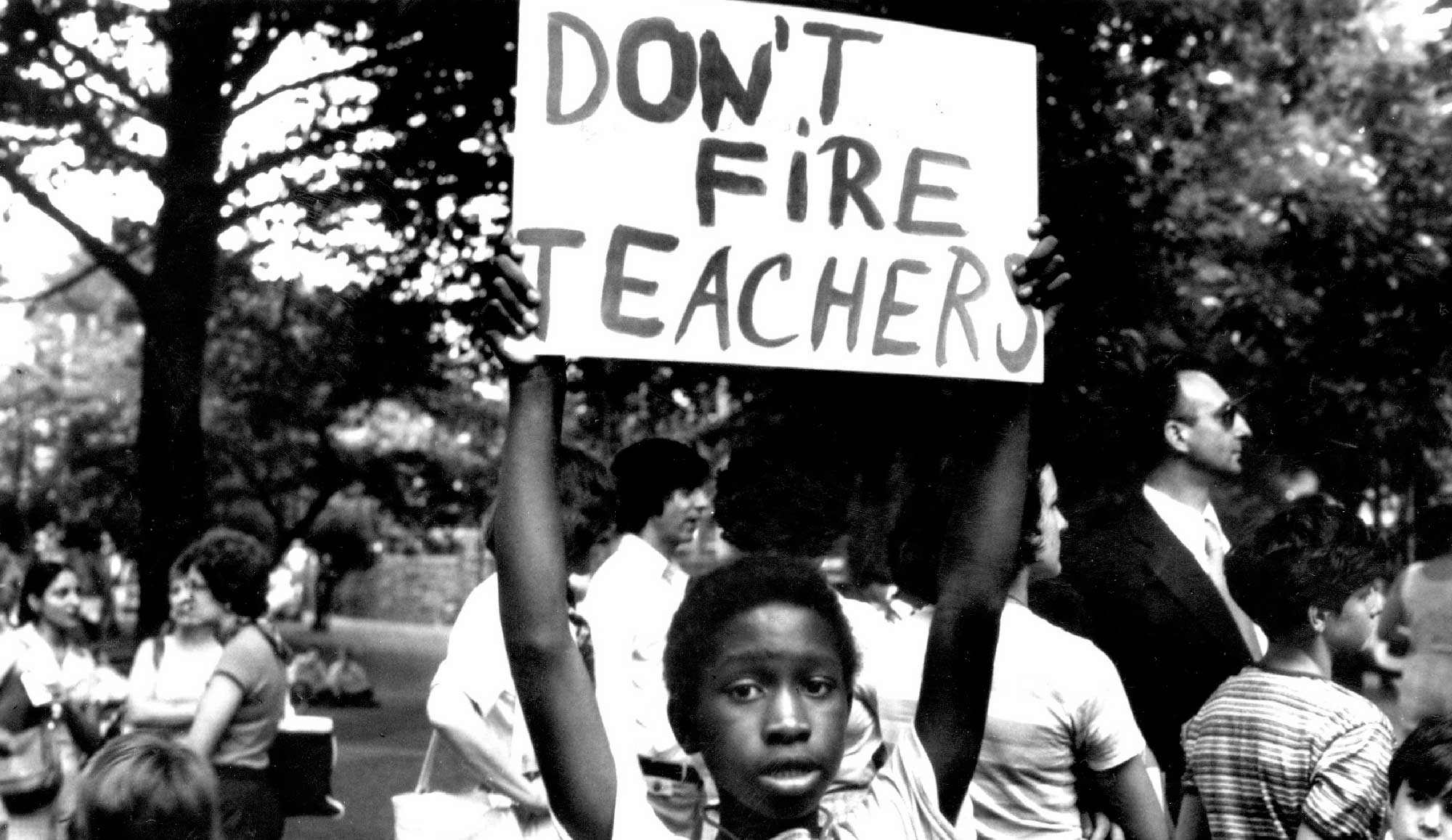
Personal sacrifice leads to professional gains
Penalties for strikes are severe. They can include the loss of two day’s pay for each day of the strike, loss of dues check-off, and jail time for strike leaders. In the ‘60s and ‘70s, 84 unionists went to jail for striking. The honor roll of those who sacrificed for the common good includes locals in Lakeland, Levittown, Nyack, Schenectady, Eastchester, New York City, Beacon, Orchard Park, Yorktown, North Syracuse, Lindenhurst and Massapequa. A dozen strikes concluded after one day, while 17 strikes lasted three weeks or more.
‘Our strike is just’
Retired teacher Marilyn James fought back tears as she shared the notes her colleague Rose Marie Archer had written in 1984 when the St. Regis Falls United Teachers struck over class size: “We are joined in a struggle for the value of education, for our present students’ and for our future students’ sake. We know our cause is honorable and we believe our strike is just.” Six weeks later, after picketing through Adirondack sub-zero cold and watching bused-in strikebreakers earn double pay, the 32-member union bargained a contract that preserved the class-size provision.
Victory at St. Regis Falls came at a high price, as it has in scores of other strikes where NYSUT locals took the ultimate stand. No St. Regis teachers were jailed for striking but penalty fees were deducted. “We didn’t get a regular check until the last pay day,” James recalled. “I cashed some that totaled 60 cents.”
Lorraine Bonner won’t forget the sinking feeling at “three minutes to midnight” on Sept. 29, 1997, when St. John’s Hospital made a final offer of no raise and demanded givebacks from its health professionals. “I knew we’d have to strike,” said Bonner, then president of the St. John’s Federation of Nurses and Health Professionals in Smithtown. For the 10 days the strike lasted, “I couldn’t sleep, worrying about our members,” she said. “It was the worst thing I’ve ever been through; but the strike led to good things.”
More than two decades ago, the Yonkers Federation of Teachers walked out over class sizes, salary, safety and discipline. The fourth strike in the YFT’s history, that 1999 walkout inspired widespread parental support and was resolved after three days, reinforcing teachers’ “meaningful voice” in ensuring quality schools, said then-YFT President Steve Frey.
Faculty and librarians in NYSUT locals on the C.W. Post and Brooklyn campuses of Long Island University struck in 2003 against an administration seeking to cut benefits, increase workload and expand class sizes. After a three-week walkout, the NYSUT locals prevailed. Gains included a reduced and standardized workload, a win 12 years in the making.
A milestone amendment
“Triborough was a tremendous gain for teachers,” said Levittown United Teachers President Charlie Kemnitzer, whose local struck for 34 days in 1978 after the school board threatened to cut salary steps, health insurance, and class size limits from the expired contract.
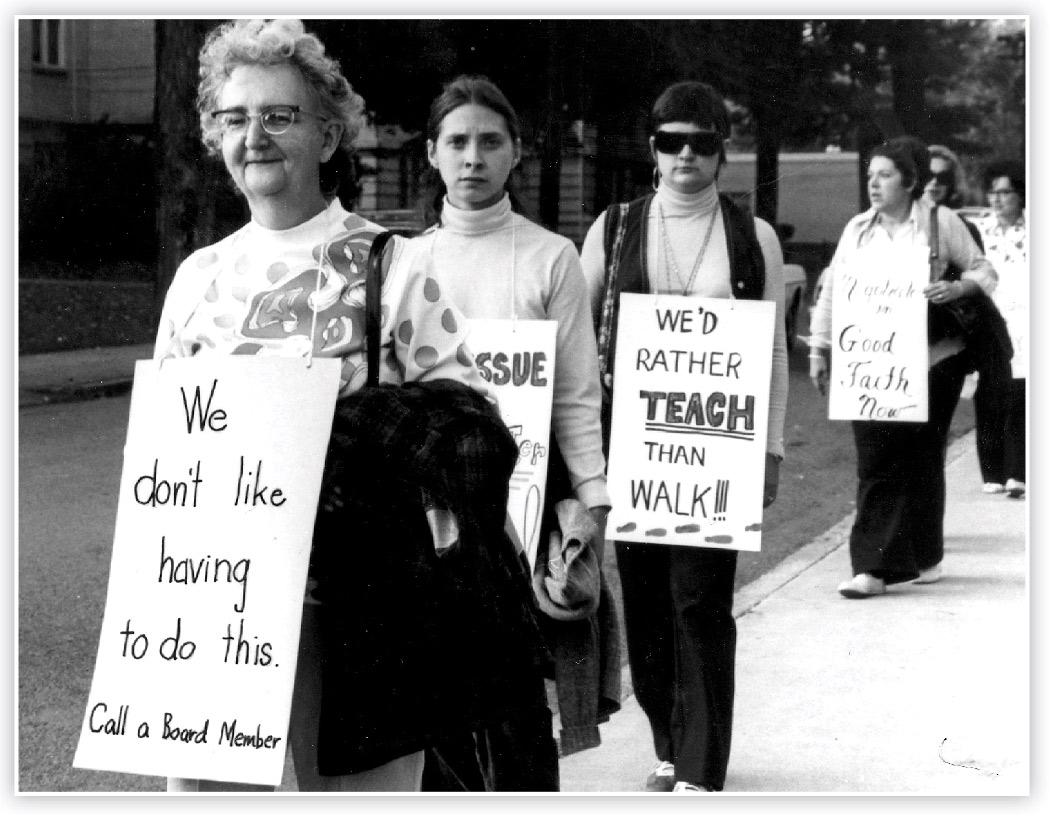
Oneonta teachers strike in 1975.
While strikes remain rare, the courage of union activists who walked the line lives on.
A 1976 strike by the North Syracuse Education Association turned tragic when a car driven by a drunk driver careened into a line of picketing teachers. Teachers on the front line were injured, and science teacher Emilio Colabello, 34, a beloved husband, father and colleague, was killed. This was a sacrifice no one could bear.
Colabello’s memory is cherished still by his union brothers and sisters, and his commitment to his union lives on. Emilio’s son, Chris, followed his father into teaching and a career as a union activist. Some 47 years after Emilio Colabello died on his union’s front lines, Chris Colabello serves as NYSUT’s regional staff director in Central New York.
Timeline
-
1974CUNY hit with three rounds of budget cuts in NYC fiscal crisis, resulting in staff reductions and a hiring freeze. Professional Staff Congress mounts ‘Save CUNY’ campaign.
-
1975Gov. Hugh Carey signs three bills that NYSUT calls ‘a revolution in tenure.’ They protect BOCES teachers whose programs relocate and teachers who transfer grades. A single elementary tenure area is created.
-
1975NYC fiscal crisis comes to a head after months of rising labor unrest. The NYC Teachers’ Retirement System saves city from default by investing $150 million in bonds.