

Unity at last
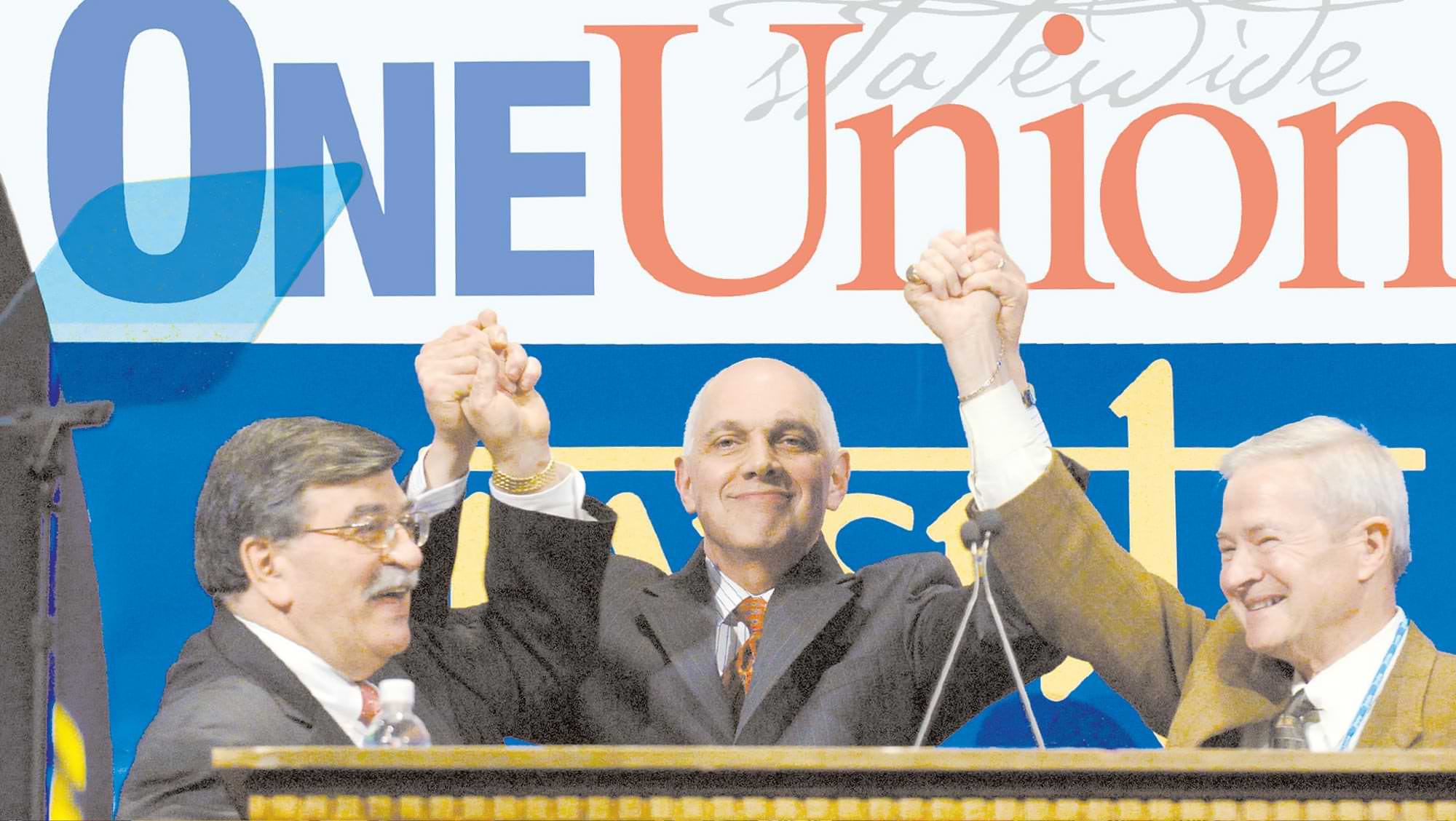
A major achievement, 30 years in the making
As floodwaters receded, NYSUT President Dick Iannuzzi traveled to hard-hit areas ready to offer help to members in need. He knew that a number of Southern Tier locals were affiliated with NEA/NY, NYSUT’s longtime rival. Unification between NEA/NY and NYSUT was in the works, but it wasn’t yet official. That didn’t matter.
NYSUT services, including support from the NYSUT Disaster Relief Fund, would be made immediately available to NEA/NY unionists who had suffered losses. “The devastation and hardship … is far greater than most can imagine,” Iannuzzi said. “These are our union sisters and brothers. We must do everything we can to come to their aid.”
NYSUT’s Disaster Relief Fund had been deployed many times in response to natural catastrophes. Sustained by members for members, the fund provides individual checks to those in need.
“Union members know how to work together for the collective good,” said Iannuzzi. “This underscores the point that we are all one statewide union now.”
And just three months later, it became official.
Together again
It all came down to a pair of signatures as the presidents of NYSUT and NEA/NY signed a historic agreement officially unifying the two statewide unions.
The pact, inked on Aug. 9, 2006 by NYSUT President Iannuzzi and NEA/NY President Robin Rapaport, allowed a month to button up final details, although officers and staff had been preparing since the previous spring for a seamless fusion.
“Unification fulfills our vision of one unified and powerful statewide advocacy organization for all teachers, higher education personnel, school-related professionals and health care professionals in New York state,” said Iannuzzi.
Rapaport said he was proud to be part of an agreement that made labor history, not only in New York state, but also nationwide. “At long last, we’ll walk the walk together,” he said. He noted that the combined membership would reap the benefits of both organizations.
Going forward, the union’s name would remain NYSUT, affiliated at the national level with both the American Federation of Teachers and National Education Association. NYSUT would remain proudly affiliated with the AFL-CIO.

A dream of unity
For NYSUT’s founding President Tom Hobart, it represented a hope 30 years in the making: to reunite with the locals that had broken away from NYSUT in 1976.
Hobart had initiated talks with NEA/NY in the late 1990s about a possible merger. When he retired in 2005, the finish line was in sight. NYSUT and NEA/NY had partnered on multiple advocacy and lobbying initiatives. Locals had supported their historic rivals on picket lines. By 2006, the philosophical differences that led to the 1976 exit of some locals had faded, miniscule in comparison to the values and mission the two statewide unions shared.
Iannuzzi and Rapaport brought negotiations to a successful resolution, with Hobart present for the historic vote and celebration at the NYSUT 2006 RA.
Rapaport, tapped to serve as a NYSUT vice president, summed it up: “We have everything in common with our NYSUT brothers and sisters — far more than ever divided us.”
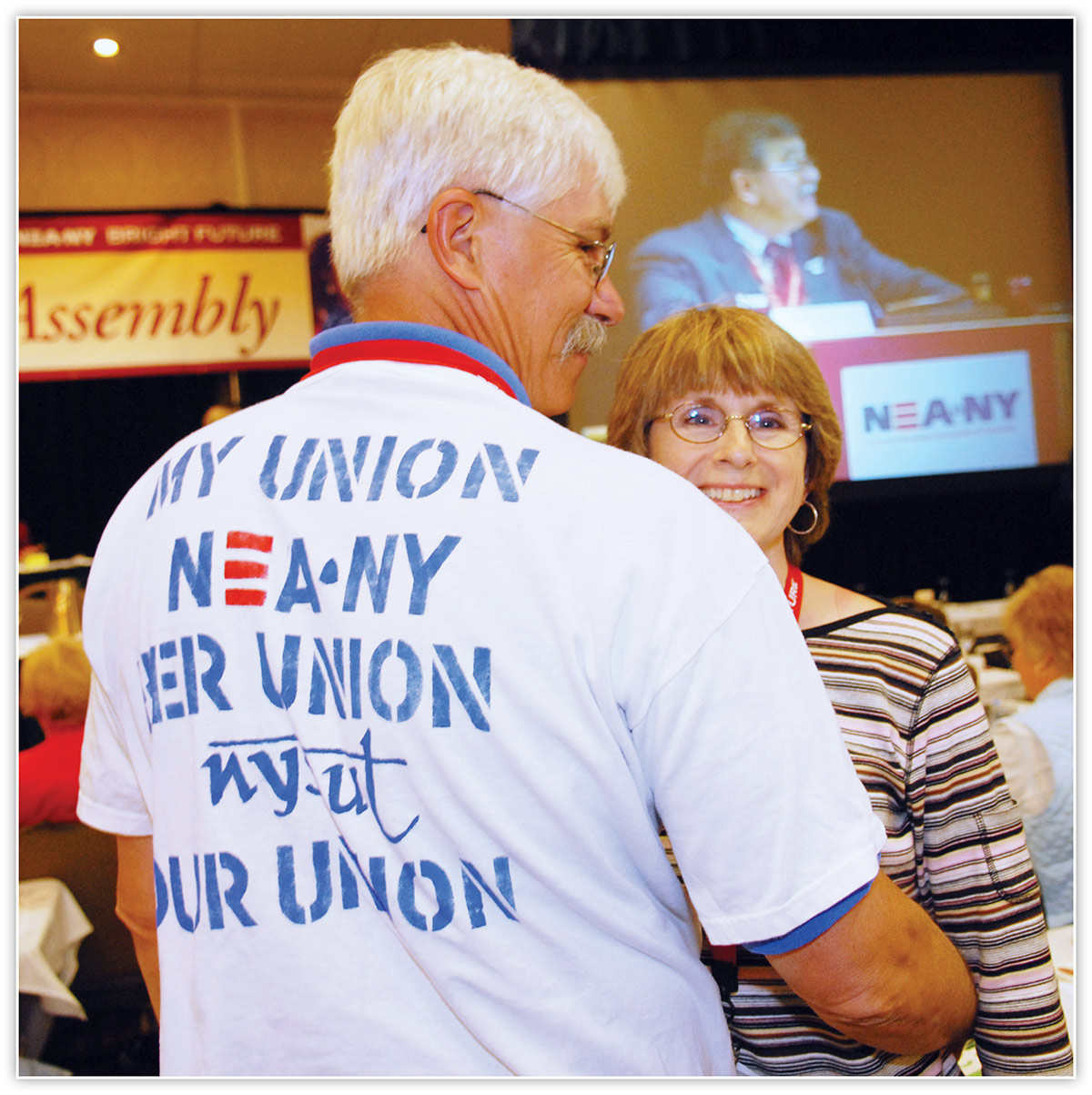
Delegates for both unions overwhelmingly endorsed the plan for unification at their respective statewide conventions.
As NYSUT celebrated its 50th anniversary, unification ranked as one of the signal achievements of its first half century.
“Unification means solidarity,” Iannuzzi said. “It was a long time in the making.”
Timeline
-
1990NYSUT membership hits 300,000, including 100,000 members of the United Federation of Teachers in New York City.
-
1990NYSUT expands services to help SRP members with retirement questions.
-
1992NYSUT activists make more than 200,000 calls to colleagues on behalf of union-backed candidates.
-
1993The Representative Assembly focuses on school violence, educational change, special ed concerns, nutrition and legislative issues.
-
1994Longest strike in NYSUT history ends at Madonna Heights after nearly a year. Teachers and teacher aides at the small private school on Long Island went out on strike over health insurance coverage and other issues.