

Small districts face pressure to reorganize
ebecca Healy has been a science teacher in the Morrisville-Eaton Central School District for 21 years and has watched successive rounds of spending cuts gut the two schools in this proud, tight-knit community.
“We don’t have electives anymore. We haven’t had AP courses since the early 2000s. We used to have enrichment classes and reading programs, but they all had to be cut, and now we’re just down to bare bones,” said Healy, president of the Morrisville-Eaton Faculty Association.
She hopes a proposed merger with neighboring Cazenovia Central School District is the solution. The state aid that comes with mergers could restore programming and help boost teacher pay, Healy said, and she has been assured by her superintendent that Morrisville-Eaton jobs would be safe.
Once consigned to the realm of private industry, mergers and consolidations are increasingly becoming bywords in the world of education, as more school districts try to deal with tapering enrollments through massive district reorganizations. Recent changes to a New York statute mean increased incentive aid is available for districts that combine; and that’s impelling more districts to weigh the potential risks and benefits.
Education is an economy of scale, and it favors larger, high-density schools. When costs are spread across more students, programming becomes cheaper, Cain explained.
The Canajoharie and Fort Plain central school districts are exploring a proposal to merge, or centralize, their two rural districts this year.
“It’s important that these districts continue to survive,” said Rob Jenks, president of the Fort Plain TA. “The best way of doing that, and helping our students, is to merge.”
The proposal will be up for an informal “straw vote” in June 2026, after the initiative was rejected by voters last March. Jenks believes more education this time around will make a difference.
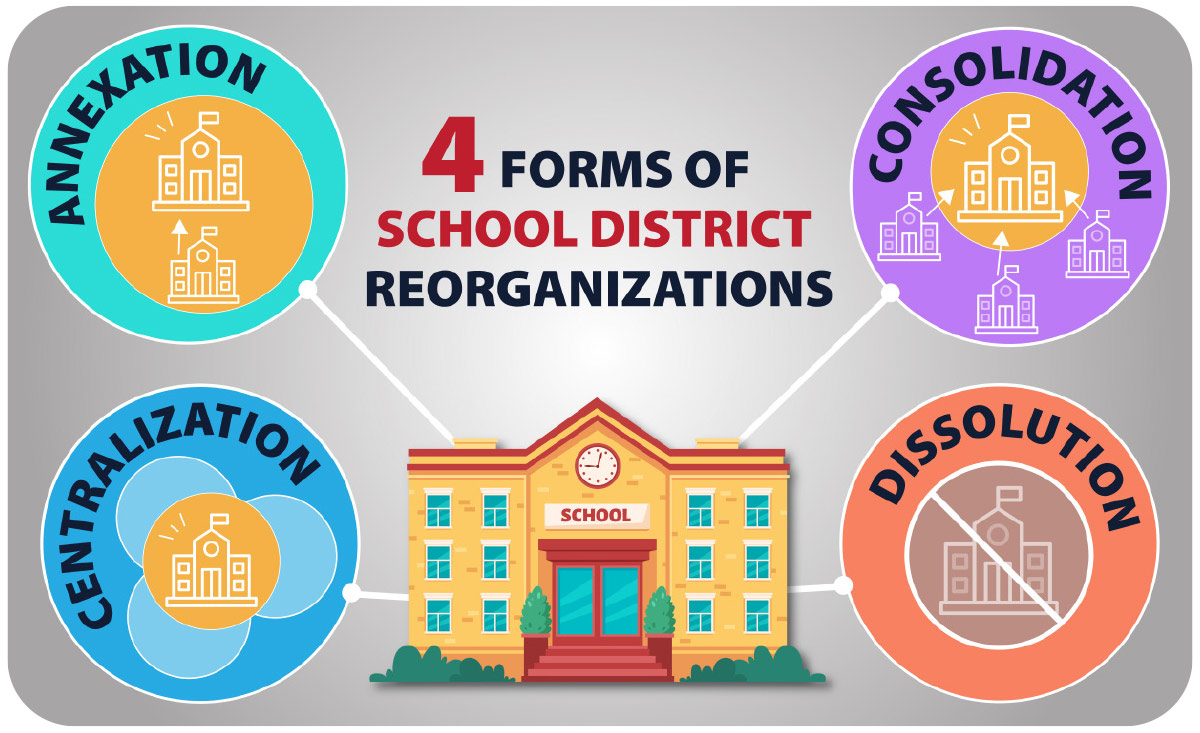
When a school district is centralized, a new school district is created that encompasses the area of the merged districts. Teachers in the old school districts become employees in the new district, with preference given to more senior personnel. Laid-off teachers are added to a preferred eligible list for seven years, which gives them priority for rehire.
If the measure passes, Jenks said he worries about the newer teachers, who make up about 25 percent of his membership; 15 percent of his members are within five years of retirement. The districts have said that all four buildings would remain open, although they may be repurposed for different grades, Jenks said.
Last August, the Wynantskill Union Free School District and Troy City School District agreed to do a feasibility study on merging. Wynantskill comprises one building, Gardner-Dickinson School, which encompasses pre-K through 8.
“When I first started there, we had close to 500 students and now we’re down to 300,” said Kaelyn Madelone, a first-grade teacher and president of the Wynantskill TA.
If voters pass the measure, Wynantskill territory will be annexed to the Troy CSD. The Troy superintendent and school board have already announced their intention to keep the Gardner-Dickinson School open, and its employees intact, Madelone said.
The newly reorganized district stands to receive a total of $241 million in state funding, and any outstanding debt would be recalculated at Troy’s building aid ratio. “The kids would get so many more programs, so many more opportunities than we could ever hope to have at our little school with the budget that we have,” said Madelone.
With advantages like that in the balance, Wynantskill TA held a vote on the annexation; 97 percent of members voted to support the move.
“My biggest piece of advice: figure out what your members want to do and make sure that you stick together, because then that’s going to make your voice more powerful in the whole situation,” said Madelone.