
Big change starts with small moments
second grader arrives at school, distracted and withdrawn. Her teacher knows why: Her family is struggling, like so many are these days. Breakfast didn’t happen this morning.
That teacher talks to colleagues. They all know the issues and see the problems. They know their students and their students’ families are barely getting by, and it’s teachers’ jobs to care and try to make it better.
Through the union, teachers combine their voices and bring the issue to Albany. Lawmakers listen, because it’s not just one story from one corner of a vast state. It’s the story of millions of struggling families and children across the state, told by the collective voices of hundreds of thousands of educators.
Policy changes.
But it’s not just her. It’s 2.7 million children across the state who won’t have to deal with hunger or stigma. One student’s struggles represent the struggle of one family. One family’s struggles represent what’s happening in communities across New York. And when 700,000 NYSUT members witness these struggles every single day — in every classroom, cafeteria, school bus and community — that collective voice becomes impossible to ignore. This is how fairness in action works.
Educators see the problem. We document it. We organize around it. We fight for solutions.
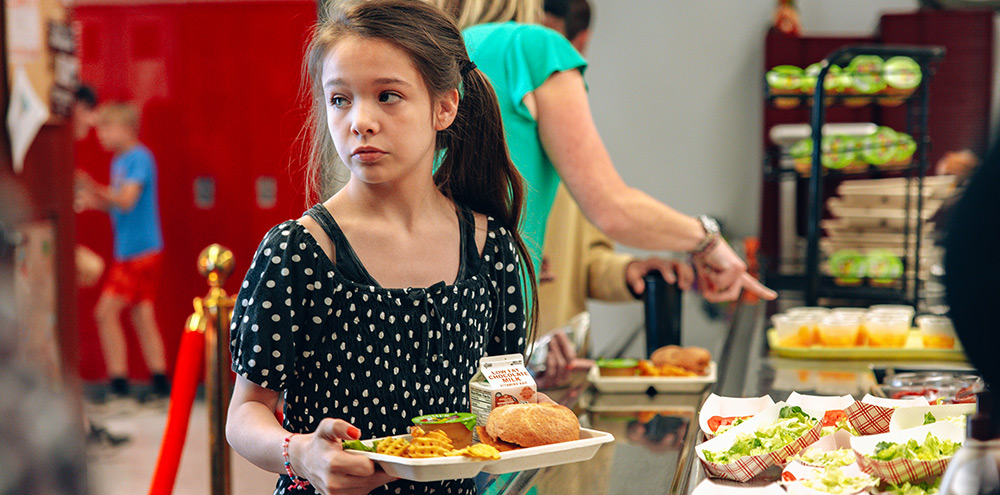
And when we win, entire communities benefit. Just take a look at the results of our universal meals campaign. (Read the full story on the next page). As a result of our advocacy, students are now able to focus better in class, families save $165 per month, per child, food service workers take pride in serving quality meals, and no student has to suffer the stigma of being singled out by free meal programs.
Universal meals proved that the cycle works: observation leads to advocacy, which leads to new policy, which leads to real improvement in people’s lives.
But our members are still witnessing other struggles every day. Students without winter coats. Families choosing between rent and healthcare. Our colleagues — the food service workers, aides and bus drivers who make our schools run — working full-time jobs that still don’t pay enough to make ends meet.
We live it.
We fight to fix it.
That’s what seeking fairness looks like.