

Celebrating early female unionists

omen are transforming the labor movement but, as the New York State AFL-CIO Women’s Committee learned at its annual meeting, that’s always been the case.
This fall, committee members toured the Kate Mullany National Historic Site. The three-story brick house was once home to Mullany, a laundry worker who organized the first all-female labor union in 1864.
“This is a story of inspiration, and it’s a story that should be told,” said Melinda Person, NYSUT president and co-chair of the new AFL-CIO committee dedicated to women’s issues. “I am walking in a space where a powerful 19-year-old Irish immigrant came, and she conquered. She started a union of women. She created change, and she did it in the 1800s.”
Today, the state’s labor federation represents 2.5 million working New Yorkers, nearly half of whom are women. The AFL-CIO Women’s Committee was established last year to amplify women’s voices in labor and ensure that women’s issues stay front and center.
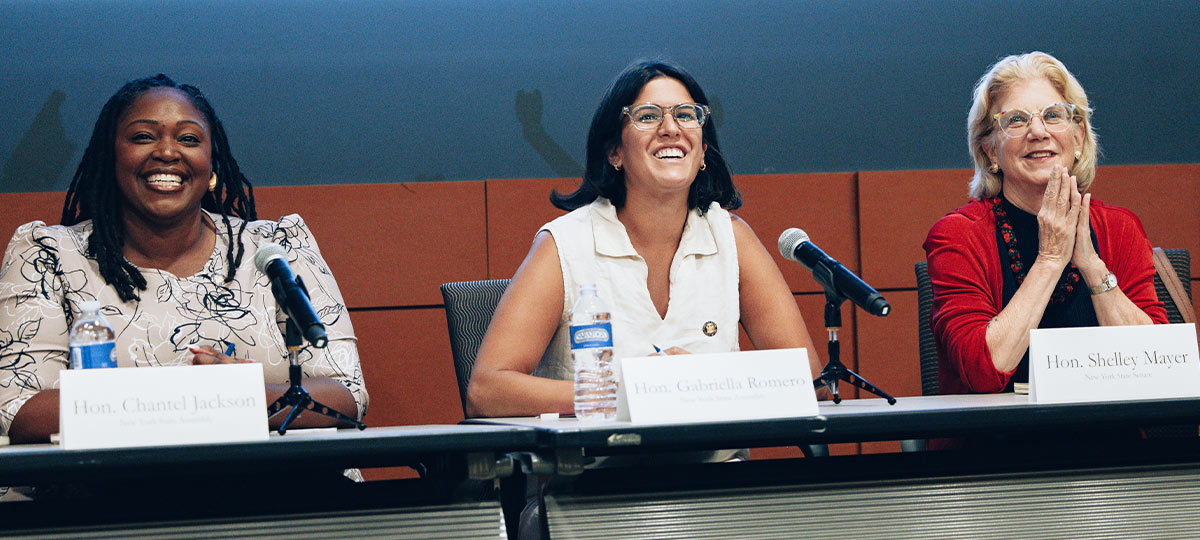
The group, which includes members of NYSUT, District Council 37, SAG-AFTRA and SEIU, tackled an ambitious agenda which included Medicaid cuts, immigration policy and artificial intelligence.
The Mullany house was made a national historic site as the result of a concerted effort by NYSUT and the AFL-CIO, championed by Paul Cole, executive director of the American Labor Studies Center. The site commemorates Mullany’s struggle to organize and fight for better wages. Mullany and her fellow laundry workers washed, starched, and ironed shirt collars 12 to 14 hours a day for a scant 3 to 4 dollars a week. When their request for higher wages was turned down, they launched a successful strike that lasted for five freezing days in February. Visit nysut.org/women to read more about the AFL-CIO Committee and NYSUT’s work supporting women in labor.