

In Schenectady, lessons from 1975 strike still resonate 50 years later
lessons from 1975 strike
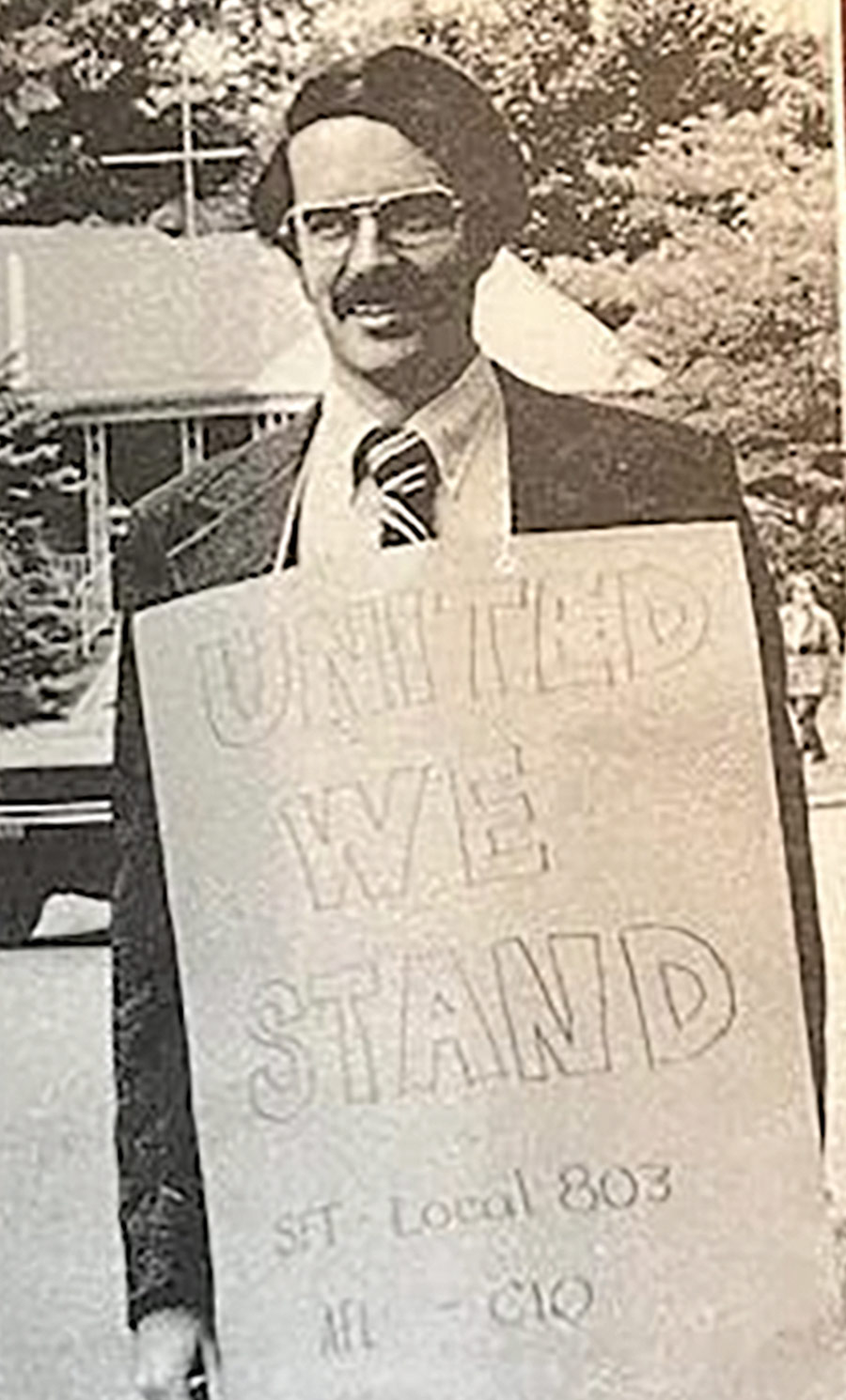
his is what we had to do; we had no choice.” Fifty years ago, Carole Nastars and members of the Schenectady Federation of Teachers went on strike. For 15 days, they marched, chanted and called for a new and fair contract. Twelve teachers went to prison.
In the end, they got a contract that still forms the foundation for Schenectady’s current labor agreements.
“It’s been 50 years. New teachers have no idea what happened,” said Erin Catrambone, SFT’s retiree chair. “You have this contract and here’s why. Here’s one of the main reasons why that happened.”
The 1975 Schenectady teachers’ strike was illegal under New York’s Taylor Law. It took place seven years before the 1982 Triborough Amendment, which requires employers to honor the terms and conditions of an expired agreement. It was because of this unilateral ability to change the contract that educators started the 1975–76 school year on sidewalks instead of their classrooms.
“They tried to really work with the district,” said Catrambone, who was in seventh grade when the strike took place. Nastars was her art teacher. “They started negotiating in January [before the strike]. They did what they had to do.”
“We were protecting our rights. It was very simple,” said Tom Della Sala, a former SFT president. “The strike made me a union activist.” When the strike happened, he was still an untenured teacher at Schenectady. He walked the picket line anyway, despite the risks to his job. “My father was a Teamster; I wasn’t going to cross a picket line.”
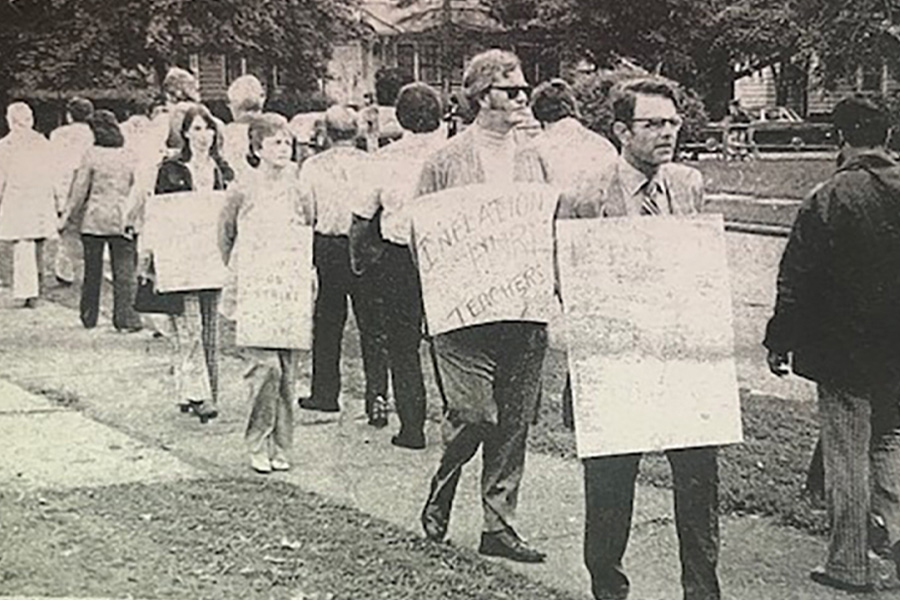
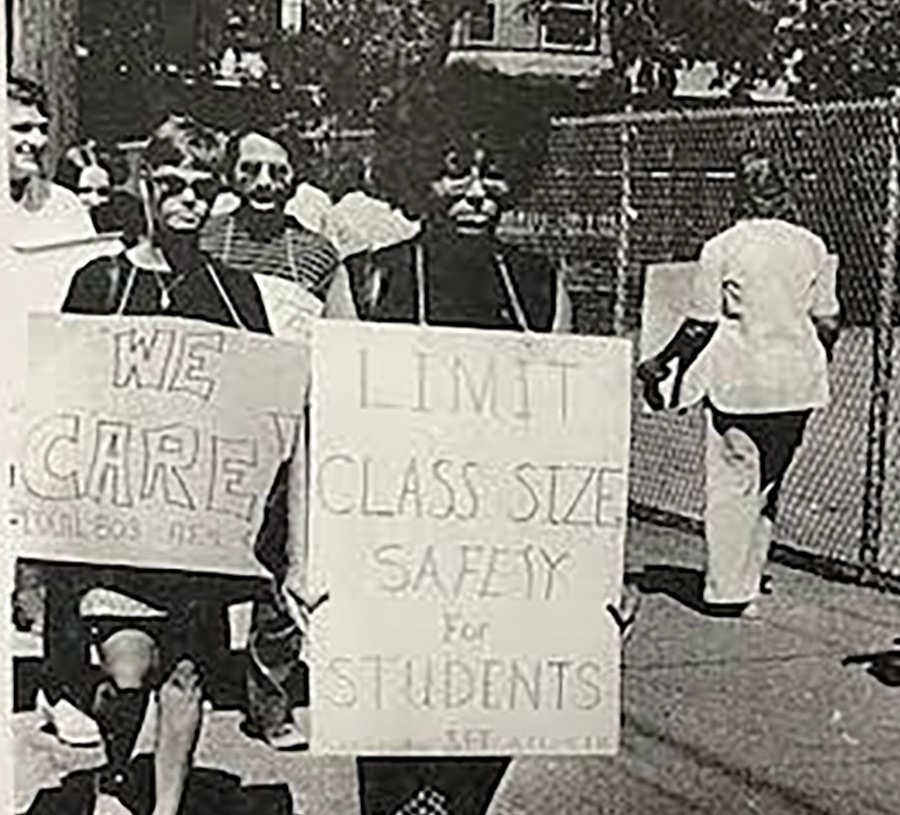
“They were pretty organized, despite the lack of cellphone or email communication,” said Catrambone. Strikers received support from parents and other unions, including Schenectady firefighters and the International Union of Electrical Workers. Even some students supported the strike, as the high school newspaper club published articles detailing what was going on. Community members brought vegetables from their gardens, and some neighbors opened up nearby homes to provide a place for strikers to get a cup of coffee, use the bathroom, or make a phone call.
But not every teacher walked out on strike. There were some who crossed the picket line to teach those first weeks of school.
The strike dragged on for 15 days before an agreement was reached. In the end, the SFT won its bargaining positions on class sizes, length of day, number of periods, planning periods, grievance procedures, salary and healthcare. But for many of the striking teachers, though the new contract was a relief, the financial and legal issues were just getting started.
Going without pay for the strike itself was bad enough, especially after having not been paid all summer. But under the Taylor Law, every striking teacher was docked two days’ pay for every day on strike: a total of 30 days. That reduction in pay was spread over paychecks through the end of 1975. “I had a friend whose mother went on strike,” said Catrambone. “They had two cars. They had to sell one of them to pay the bills.”
Once again, other unions stepped up to help. The IUE-CWA Hall in Schenectady bought Christmas gifts for the children of strikers.
Della Sala was up for tenure the following school year. While he was awarded tenure, it was not granted until the sixteenth day of school in 1976, instead of the first day, because of his participation in the strike. “It just shows the pettiness from the school board that we were dealing with,” he said.

And then there were the “Schenectady 12;” twelve teachers deemed leaders of the strike who were sent to prison for striking in violation of the Taylor Law. Today, only one member of the Schenectady 12 is still alive: Carole Nastars. “Current teachers don’t understand how everything they have grew out of that strike,” said Della Sala. “The strength of the union that they take for granted didn’t exist back then.”
Fifty years later, the SFT is hoping to tap into that strength again as they enter into contract negotiations with the Schenectady City School District. “You carry the weight of that responsibility, that if they were willing to do that, what are you willing to do to carry forward that legacy,” said Mike Silvestri, current president of SFT. “It’s something I carry as my charge to honor what they did.”
SFT has plans to honor the strike and its impact throughout the entire school year. The union has already rolled out T-shirts and hosted a reception to honor retirees and former strikers. An audio and video documentary of the strike is in the works, with Catrambone leading the charge. “I understand why they did what they did,” she said. “I gained a true appreciation of what they did and what they sacrificed.”
“There’s a quote from the movie Woodstock, ‘There’s always a little bit of heaven in a disaster area.’ The strike itself was horrible,” Della Sala said. “But good things came out of it in terms of self-worth and the value of the union, and the closeness of the teachers. It shaped everything I did after that.”
Silvestri agreed as he looked toward negotiations early next year. “The biggest thing I want people to take from this is we need to take care of each other. Members can see how members took care of each other in the past, and we can do that now as well.”