

No robot teachers; protect human-centered learning
hen the Salamanca City Central School District’s plan to install “Sally” — a silicone-skinned, humanoid, AI-powered robot manufactured by Realbotix — in a local classroom this fall became public in July, educators and parents were alarmed.
“A robot built by a company associated with sex dolls has no business in our classrooms,” said NYSUT President Melinda Person. “Our students don’t need robots. They need real relationships with caring adults.”
Thanks in part to issues raised by NYSUT and local parents, the New York State Education Commissioner sent a letter to the district expressing concerns over the plans. Soon after, New York state Sen. Shelley Mayer introduced new legislation that would prohibit school districts from using AI-enabled humanoid robots to perform the duties of an educator.
Salamanca responded by announcing it was putting a hold on the robot project, but concerns linger about the appropriate role of technology in classrooms.
“NYSUT is committed to fighting thoughtless expansion of this technology,” Person said, “and we will explore every avenue necessary to protect human-centered learning in Salamanca and in every classroom across this state.”
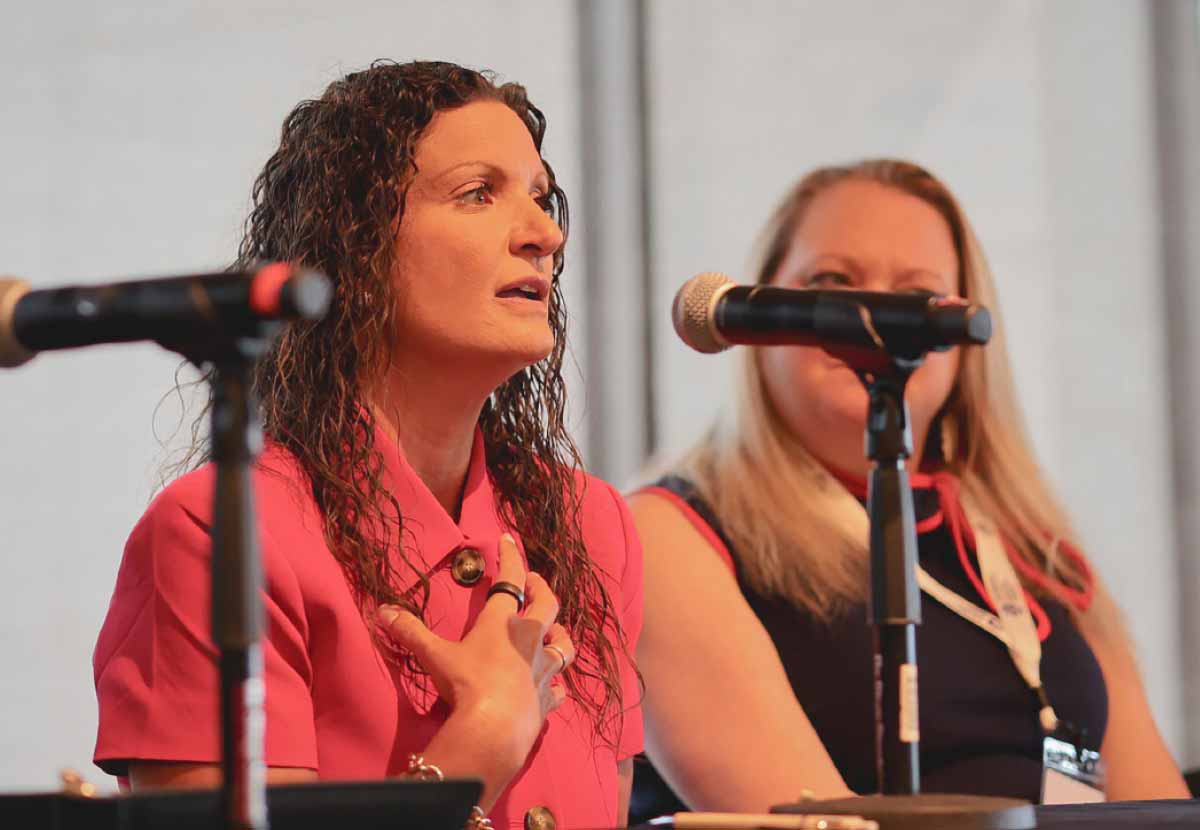
At City & State’s annual Education in New York Summit in August, NYSUT Executive Vice President Jaime Ciffone spoke to educators and policymakers about how to build future-ready learning environments and the place of technology and AI in classrooms. Ciffone emphasized the need to create authentic learning experiences for students and the importance of giving educators a meaningful voice in their classrooms.
Asked what year New York should realistically expect the first robot teacher, Ciffone answered without hesitation. “Never,” she said, eliciting loud cheers from the audience. “Teaching is a human-centered profession.”
“NYSUT is calling for strict and developmentally appropriate limits on AI and screentime in our schools and in our classrooms,” Ciffone continued. “Any approved artificial intelligence used must be supervised, educator-led, and aimed at critical thinking rather than replacing human judgement.”
In May, NYSUT’s Board of Directors passed a resolution that calls for developmentally appropriate limits on screen time and artificial intelligence in New York schools — especially for the youngest learners — while affirming that educators, parents and families, not technology companies, should drive decisions about how technology is used in the classroom.
In September, NYSUT will host “Unplugged”, a convening of educators, researchers, parents, and policymakers to examine the data around technology use and explore what it takes to create healthier, more effective learning environments for students.
“Educators are not anti-technology. We are pro-child,” Person said. “Every decision made in the name of innovation must actually serve the students in our classrooms, and NYSUT will lead that fight.”