

Better Together: Collective Care Team members advocate for students, each other
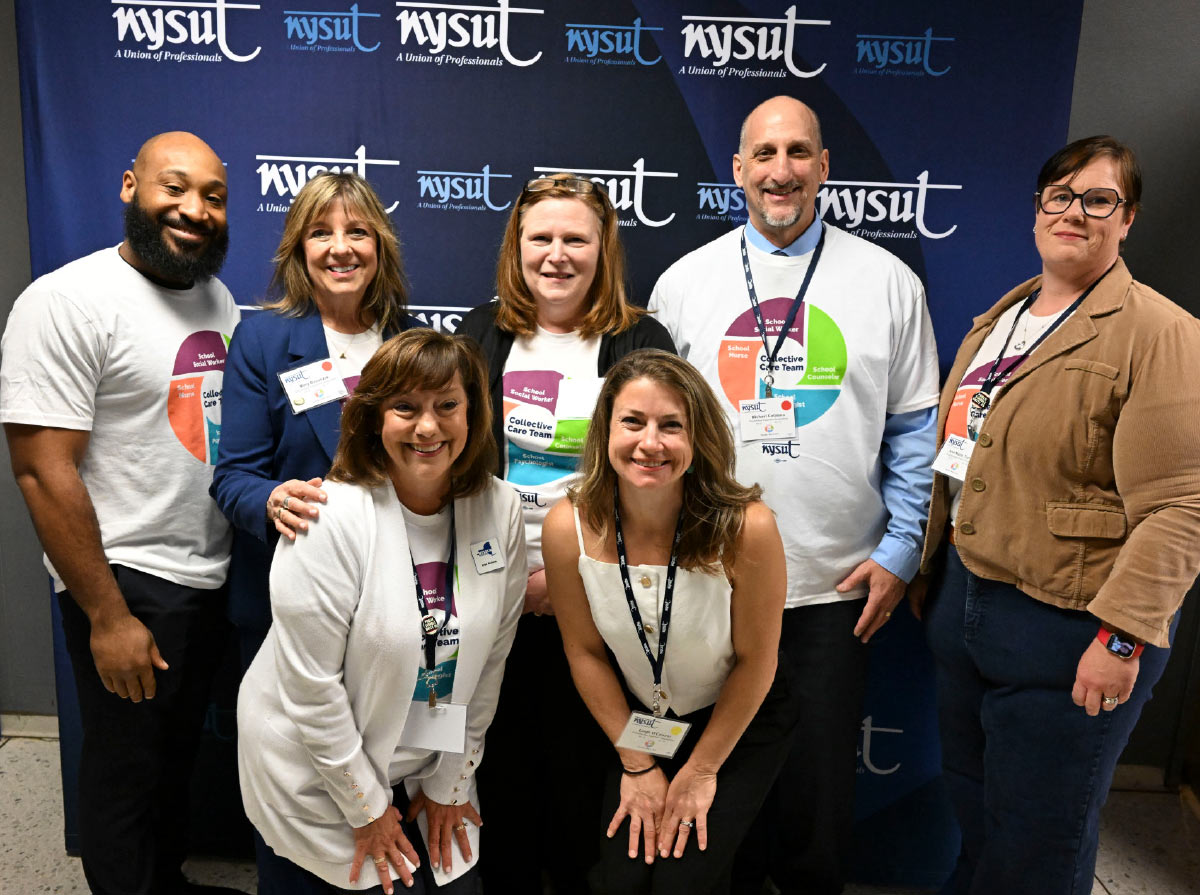
large, enthusiastic group of members from across the state gathered in Albany in May for NYSUT’s Collective Care Lobby Day. Nearly 50 members, representing all professionals in the Collective Care Team — school nurses, school social workers, school counselors and school psychologists — fanned out across the Capitol to meet with legislators and advocate for a series of bills that strengthen the Collective Care workforce, mandate better staffing ratios and provide support and new protections for the students in their care.
At the third annual Collective Care Lobby Day, several members were making their first foray into legislative advocacy. Many donned shirts emblazoned with the colorful Collective Care Team emblem and the words “we are better together.”
“We are here to educate the policymakers,” said NYSUT President Melinda Person. “The collective power of our members is what changes things in schools,” she added.
Across different groups and legislative meetings, Collective Care Team members drew clear connections between the issues they face daily and the bills they were championing. Members highlighted a bill that would require a school nurse in every public school and BOCES building in the state.
“Sick, tired, unhealthy kids can’t learn,” said Julie Murray, school nurse and member of Erie 1 Professional Education Association, summing up the need for action.
Chuck Kron, a school social worker and member of the Orchard Park Teachers Association, emphasized that students are in a moment of high need. “Kids are increasingly isolated and looking for connection,” as technology continues to encroach on their daily lives and learning, said Kron. Difficult economic conditions and the lingering effects of the pandemic only add to the complex challenges facing New York families.
Adequate staffing, governed by appropriate professional-to-student ratios, helps the Collective Care Team support students. Without enough people to do the work, students turn to AI, where they may get inaccurate information that can harm their physical and emotional health.
“We don’t want our students to use artificial intelligence to get support. We want them to use the Collective Care Team,” said Sonia Byrd, a school psychologist and member of the Yonkers Federation of Teachers.
To address these concerns, members were advocating for two staffing-related bills that would require collection and reporting of data related to professional-to-student ratios for the roles on the Collective Care Team; development of plans to reach nationally accepted ratios; and separately, creation of appropriate ratios based on local needs. A third bill would prohibit AI chatbots from using features that are unsafe for children.
Beyond advocacy for specific bills, members sought to help legislators understand the different roles on the Collective Care Team, how they fit together, and what is urgently needed for these skilled professionals to be able to do their best work on behalf of New York’s children.
School counselors, school nurses, school psychologists, and school social workers all provide critical support to students, but each role requires specialized training and skills.
“We work side by side, but we cannot work in place of each other,” said Lysa Mullady, school counselor and member of the Copiague TA.